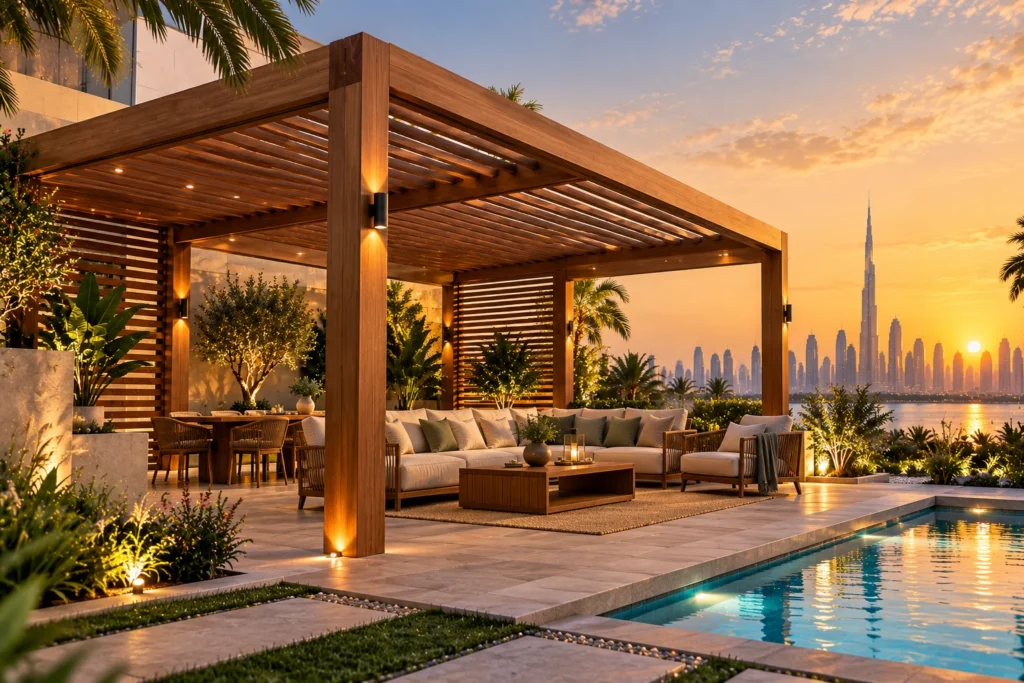
Every wooden pergola Dubai homeowners install faces the same tough test: months of strong sun, dry heat, dust, humid coastal air, and the odd heavy shower. Some timbers handle that well for years. Others crack, warp, or fade fast without constant care. The design gets most of the attention, but the timber you pick decides how your pergola looks in five years. This blog compares the four main options, so you can choose a wooden pergola Dubai’s climate won’t wear down too quickly.
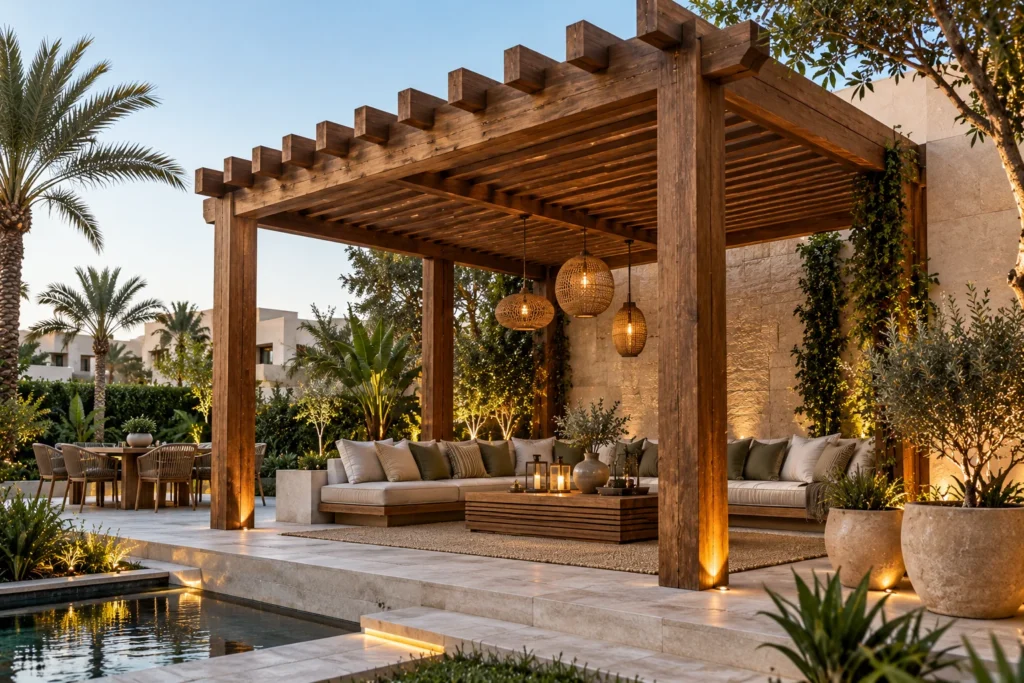
Table of Contents
Why Timber Choice Matters So Much in Dubai
Wood is a natural material. It takes in moisture when the air is humid and releases it when the air is dry. In Dubai, those swings happen often, and they put stress on beams and joints. Strong UV light also breaks down the surface of the wood and changes its colour.
Dense, durable hardwoods cope with this better. They move less, resist insects, and hold their shape. Lighter, softer woods can still work, but they depend more on treatment and regular maintenance.
Comparing the Main Timber Options
Here’s how the four most common choices compare in real use.
Teak
Teak is the premium choice. It’s dense and rich in natural oils, which help it resist moisture, rot, and insects. It starts a warm golden-brown and slowly turns silver-grey if left unsealed. Some owners love that weathered look; others oil it to keep the original colour. Teak usually costs the most, but it also asks the least of you over time.
Red Meranti
Red meranti is a reddish-brown hardwood with a straight, even grain. It’s more affordable than teak and easy to work with, which makes it popular for larger structures. It isn’t as naturally durable, so a good sealer or stain and regular re-coating are important. It suits homeowners who want a classic timber look at a more moderate budget.
Iroko
Iroko is sometimes called “African teak” because it shares many of teak’s strengths. It’s tough, naturally oily, and resists decay well. It’s a strong option for poolside areas and gardens with sprinklers, where wood stays damp more often. Like teak, it weathers to a soft grey unless it’s oiled.
Thermowood
Thermowood isn’t a single species. It’s wood that has been heated to very high temperatures to change its structure. This makes it more stable, so it shrinks and swells less, and it becomes more resistant to rot without chemical treatment. It’s lighter than hardwoods and gives a clean, modern look. The trade-off is that it can be more brittle, and it still needs a UV-protective finish to hold its colour.
Which Timber Suits Which Project?
A quick way to narrow it down:
- Luxury villa or majlis where looks and lifespan come first: teak
- Large garden structure on a moderate budget: red meranti
- Poolside or sprinkler zones that stay damp: iroko
- Contemporary design with less movement and cracking: Thermowood
- Lowest long-term effort: teak or iroko, finished well
Your choice also depends on sun exposure. A pergola on an open rooftop faces far more UV than one tucked beside a garden wall, so it needs a tougher timber or a more protective finish.
Finish and Upkeep Matter as Much as the Wood
Even the best timber needs care in this climate. A good finish, such as a UV-resistant oil, sealer, or stain, slows fading and keeps moisture out. Most wooden pergolas in Dubai benefit from a fresh coat every one to two years, depending on how much direct sun they get.
Simple habits help too. Brush off dust regularly, check joints and fixings after windy weeks, and deal with small cracks before they grow. A little attention each season is far cheaper than replacing a beam.
Questions to Ask Before You Approve the Timber
Before signing off on a design, ask your supplier:
- Which exact timber species is being used, and where is it sourced?
- Has the wood been properly dried before cutting?
- What finish is included, and how often will it need re-coating?
- Is the timber covered by a warranty against warping or cracking?
Clear answers to these questions tell you a lot about the quality of the whole project.
Related Blog Post : Hiring a Wooden Pergola Contractor in Dubai: What the Process Actually Involves
Conclusion
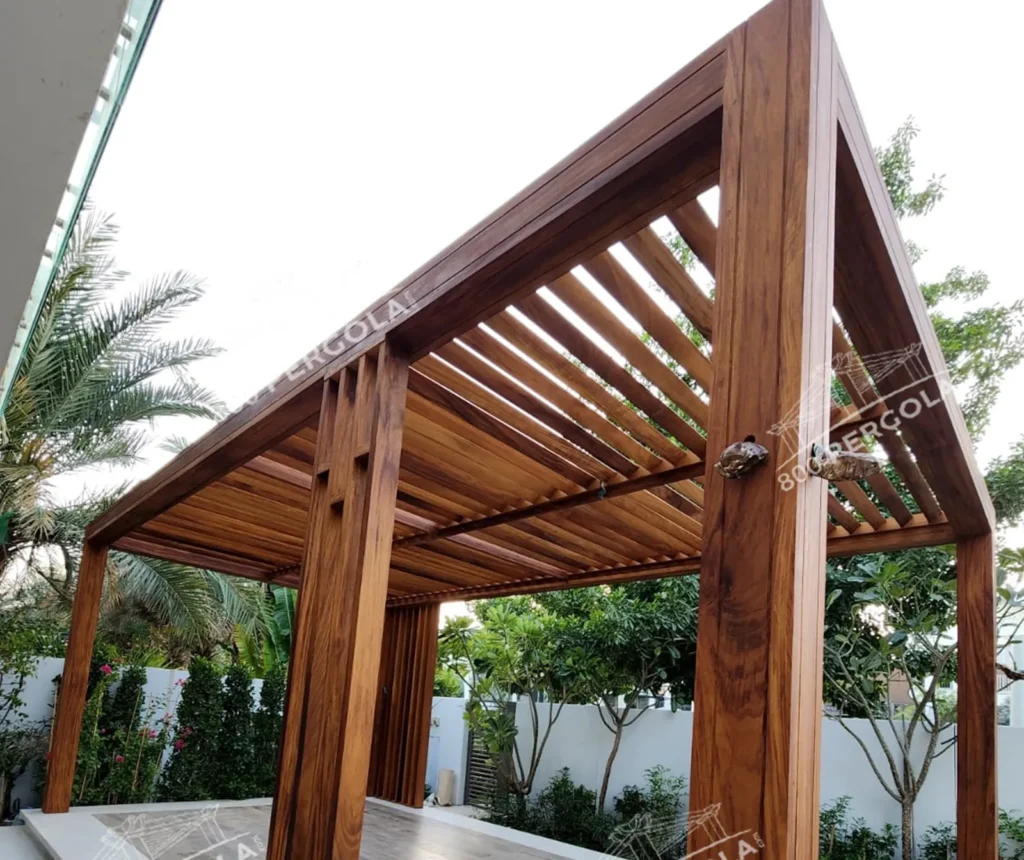
The right timber turns a wooden pergola into a long-term feature rather than a yearly repair job. Teak and iroko lead on natural durability, red meranti offers good value with regular care, and Thermowood gives stability with a modern look. Match the wood to your space, your budget, and how much upkeep you’re happy to do, and your wooden pergola Dubai project will keep looking good for years.