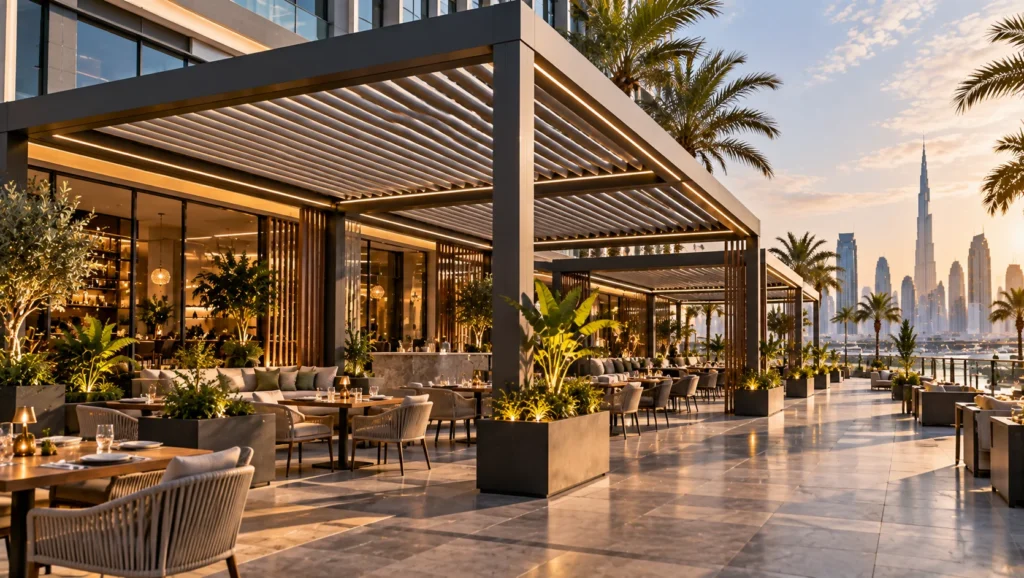
Outdoor seating and shaded walkways have become a real point of difference for commercial properties across Dubai, and a well-planned commercial pergola Dubai installation is often behind that upgrade. Malls, hotels, and office parks have different needs than a restaurant terrace or a private villa garden, from the scale of the structure to how much daily wear it needs to withstand. This blog looks at what property managers and facilities teams should think through before committing to a commercial pergola project.
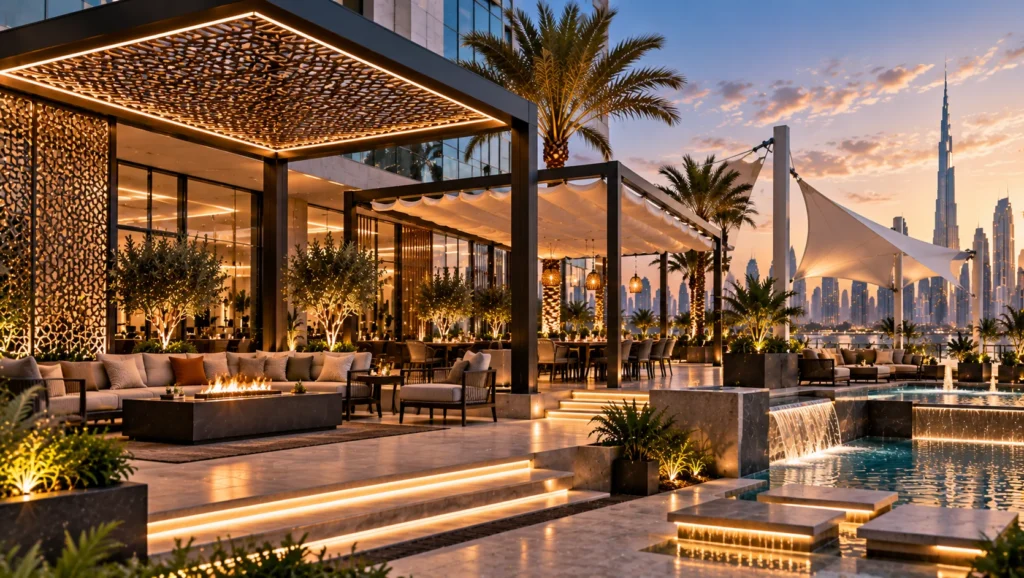
Table of Contents
Why Commercial Properties Are Investing in Pergolas
A shaded outdoor seating area, walkway, or drop-off zone adds real value to a mall, hotel, or office park without requiring a full renovation. For malls, it extends usable outdoor space for food courts and event areas. For hotels, it upgrades poolside and lobby-adjacent areas that guests photograph and remember. For office parks, a shaded courtyard gives employees and visitors a genuine reason to step outside rather than staying indoors all day. Across all three, the goal is the same: turning underused outdoor space into something people actually want to use.
How Scale Changes the Structural Requirements
Covering a much larger footprint than a typical villa garden changes the engineering from the ground up. Longer spans call for extra support that stays out of the way of foot traffic, and the structure needs to cope with far heavier daily use and, in many cases, furniture that stays out permanently rather than getting moved indoors each night. It’s worth asking a contractor directly about their track record with commercial-scale spans, since a team used to villa gardens may never have built at this size before.
Durability Standards for High-Traffic Spaces
Commercial spaces see far more wear than a private garden. Malls and hotels in particular need a pergola that holds up under constant use, frequent cleaning, and — for poolside or food court areas — regular exposure to spills and foot traffic. Ask about the grade of aluminum, the coating’s resistance to repeated cleaning with commercial-strength products, and whether the motor and hardware, if motorized, are rated for heavier daily cycling than a residential system would see.
Matching the Design to the Brand
For hotels especially, a pergola isn’t just a functional shade structure — it’s part of the guest experience and the property’s visual identity. Malls and office parks have their own branding considerations too, whether that’s matching an existing architectural style or creating a distinct outdoor feature that stands out in photos and on-site signage. Getting the design brief right at the start, including finish colors, lighting integration, and how the structure reads from key sightlines, saves a lot of revision later in the project.
Approvals and Site Logistics for Commercial Installations
Commercial installations often involve more moving parts than a residential one: facilities management sign-off, coordination around operating hours to minimize disruption, and sometimes approvals from the property’s owners’ association or municipal authority depending on the scale of the structure. A contractor experienced in commercial work will usually flag these requirements early and build them into the project timeline, rather than surprising you with delays partway through.
Budgeting for a Commercial Pergola Project
Commercial pergola projects typically involve a wider range of costs than residential ones, driven by scale, structural engineering, and often higher-spec materials suited to constant use. It helps to get a detailed, itemized quote that separates the structure, any motorized or lighting features, and installation labor, so you can see exactly where the budget is going and where there’s room to phase the project if needed. For larger properties, phasing the project across a main courtyard first and secondary walkways later can spread the cost without leaving the space looking unfinished in the meantime.
Maintenance Contracts Worth Considering
A commercial pergola sees far more daily use than a residential one, so it’s worth asking whether the contractor offers a maintenance contract rather than relying on one-off repair calls. Regular checks on motors, tracks, and structural fixings catch small issues before they turn into a closed-off seating area during a busy period. For hotels and malls in particular, where the pergola is part of the daily guest experience, a scheduled maintenance visits every few months is usually a small cost against the disruption of an unplanned repair.
Getting Facilities Teams and Contractors on the Same Page
Because commercial installations often involve a facilities management team rather than a single homeowner, it helps to agree early on who signs off on design changes, who handles access scheduling, and who the contractor should contact if something needs urgent attention after handover. Clarifying this upfront avoids the kind of back-and-forth that can slow down both the installation and any future service calls.
Conclusion
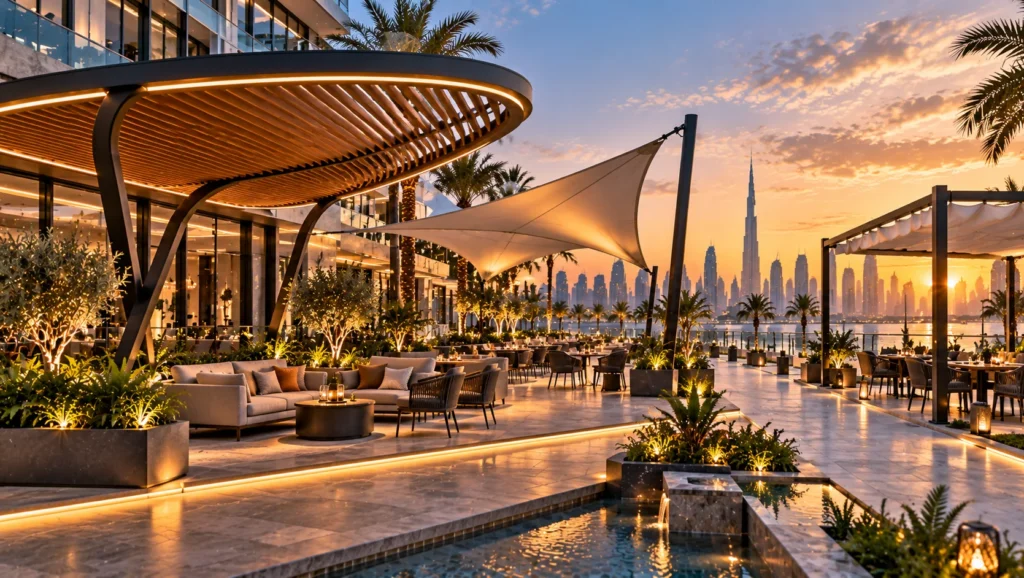
A commercial pergola Dubai installation, done well, turns an overlooked outdoor area into one of the more memorable parts of a mall, hotel, or office park. The details that matter most — structural scale, durability under heavy use, brand-appropriate design, and a contractor experienced in commercial logistics — are worth working through carefully before the project begins, rather than treating it as a larger version of a residential build.