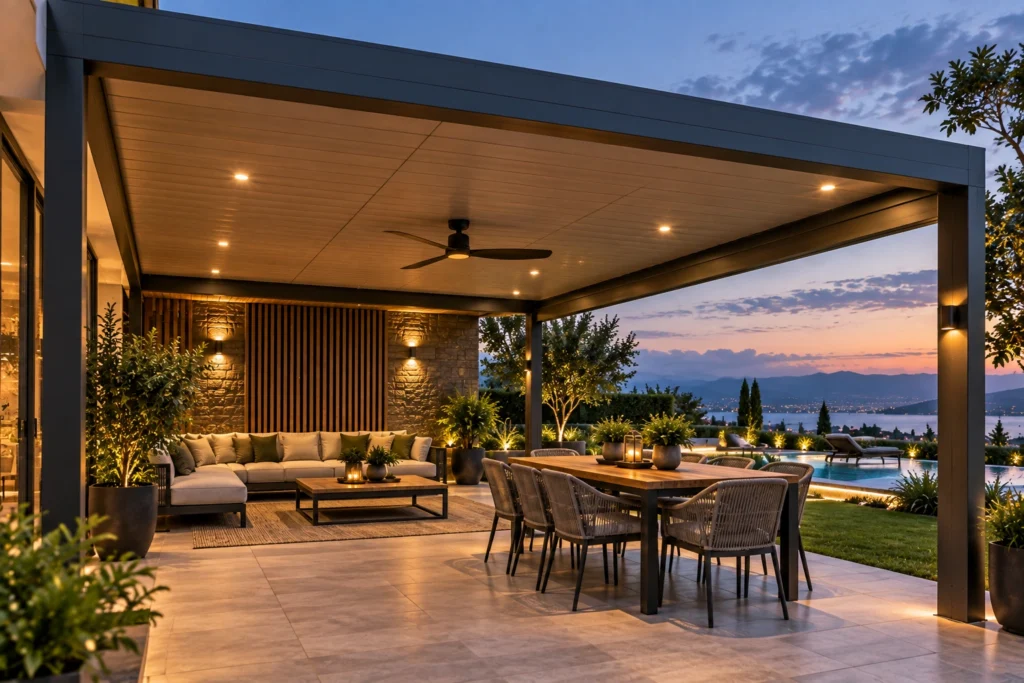
An open-lattice pergola looks elegant, but it leaves furniture, guests, and flooring exposed to Dubai’s strong sun, blowing dust, and the odd heavy downpour that catches everyone off guard. A covered roof pergola closes that gap by adding a solid or near-solid roof panel over the same frame, so the space underneath stays usable in far more conditions, whatever the weather happens to do that day. Here’s what a covered roof pergola actually offers, and what’s worth thinking through before choosing one.
Table of Contents
What Makes a Covered Roof Pergola Different
The frame and posts of a covered roof pergola look much like any other pergola. The difference is entirely in the roof: instead of open slats or a simple lattice, it uses a continuous panel — commonly polycarbonate, aluminum composite, or glass — that blocks sun and rain instead of just filtering them.
The Problems It Solves
A covered roof pergola addresses a short list of very real, very common frustrations: UV glare that fades outdoor furniture and fabrics over time, fine sand that settles onto every surface within an open structure, and sudden rain that turns a relaxed evening into a scramble to move cushions indoors. It also extends how much of the day the space is actually comfortable, since a solid roof blocks the harsh overhead sun during peak midday hours far better than open slats.
Design and Material Options
There’s more flexibility here than people expect.
- Polycarbonate panels — light-transmitting, so the space stays bright without full sun exposure
- Solid aluminum roofing — maximum protection and a clean, modern look
- Glass panel roofs — a premium option that keeps sightlines open while fully sealing the space
- Combination designs — a covered roof paired with retractable side screens for wind and privacy control
Each material comes with its own trade-off. Polycarbonate is lighter and generally more budget-friendly, but lower grades can yellow over time under constant UV exposure, so it’s worth asking about the specific grade being used. Solid aluminum roofing holds up longer with minimal upkeep but blocks all-natural light, which changes how the space feels during the day. Glass delivers the most premium look and the best natural light, though it comes at a higher cost and needs proper tinting or coating to manage heat gain.
Where Covered Roof Pergolas Work Best
This style tends to suit spaces that need to stay functional no matter the weather: poolside lounges where furniture can’t be moved every time it rains, restaurant and café terraces that depend on outdoor seating for revenue, rooftop entertaining areas exposed to wind and sun in equal measure, and home offices or reading nooks built as an outdoor extension of the house.
Combining a Covered Roof with Other Features
Because a covered roof pergola already manages sun and rain, many owners use it as the base for additional comfort features — ceiling fans for airflow, integrated lighting for evening use, or even a small outdoor heater for cooler winter nights. Planning for these at the design stage, rather than adding them later, makes it far easier to route wiring cleanly and confirm the structure can safely support the extra weight.
What to Check Before You Install One
A covered roof pergola is a bigger commitment than an open one, so a few details are worth confirming upfront.
- Drainage and roof slope — water needs somewhere to go, especially during heavier rain
- Ventilation — a fully solid roof without airflow can trap heat underneath
- Structural load capacity — important if you’re planning to add ceiling fans, lighting, or AC units later
- Any approval requirements for a more permanent-looking structure, depending on your community or building management
Related blog post – Why a Covered Roof Pergola Is a Smart Investment for Dubai Homes
Covered Roof vs Open Pergola: Quick Comparison
- Weather protection: covered roof blocks rain and direct sun; open pergola only filters both
- Furniture lifespan: covered roof reduces UV and dust damage; open pergola offers less protection
- Ventilation: open pergola naturally airier; covered roof needs designed-in airflow
- Cost: open pergola is typically the more affordable starting point
Conclusion
A covered roof pergola trades some of the airy, open feel of a traditional pergola for real, everyday protection from Dubai’s sun, dust, and rain. For homeowners and businesses that rely on their outdoor space rather than just decorate with it, that trade-off is usually worth it. A good installer will help you get the roof material, slope, and ventilation right for your specific site, so the space works as well in July as it does in January.