Outdoor design in Dubai keeps evolving, and custom pergola design is no exception. Homeowners are moving away from one-size-fits-all structures and asking for pergolas that match their home’s architecture, their lifestyle, and the way they actually use their outdoor space. This blog walks through the trends shaping custom pergola design Dubai homes and businesses this year, from materials to technology to layout.
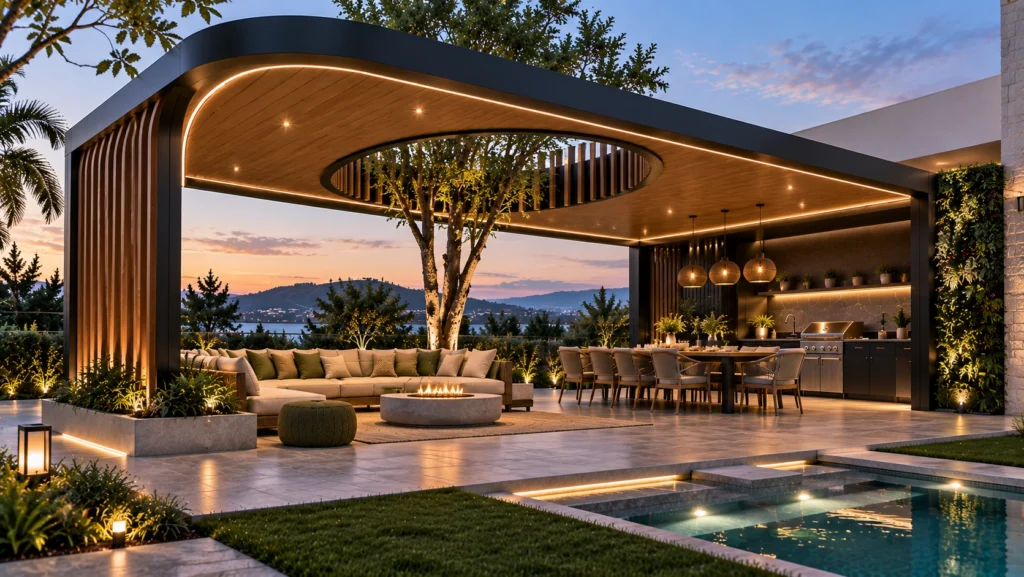
Table of Contents
Mixed Material Structures
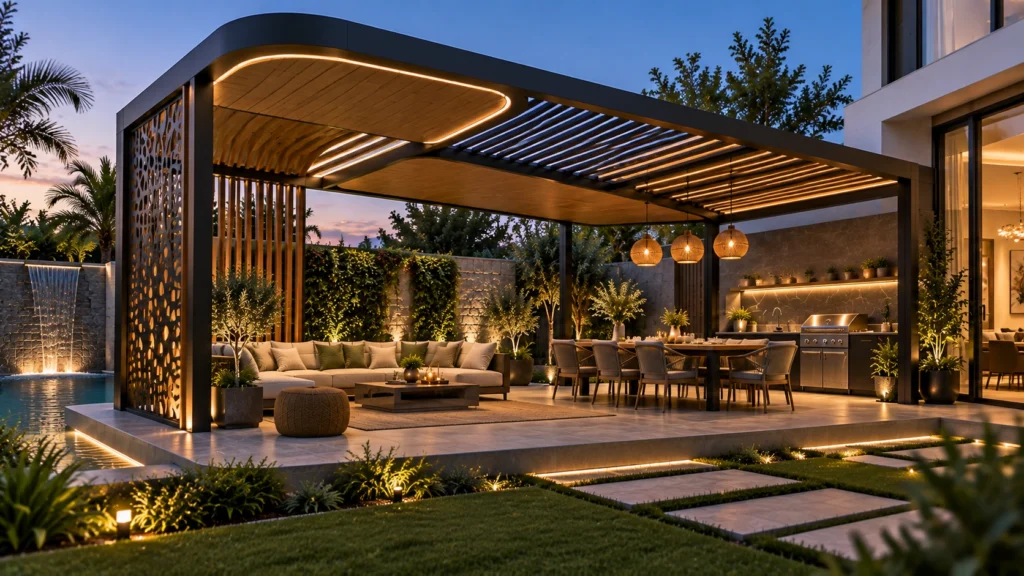
Instead of choosing between wood, aluminium, or fabric, many Dubai homeowners are now combining materials in a single custom pergola design. A timber-look aluminium frame paired with retractable fabric panels, for example, gives the warmth of wood with the durability aluminium offers in the UAE’s climate. This mix-and-match approach lets homeowners get a distinctive look without sacrificing long-term performance, and it also allows different sections of the same structure to serve different purposes.
Integrated Lighting and Fans
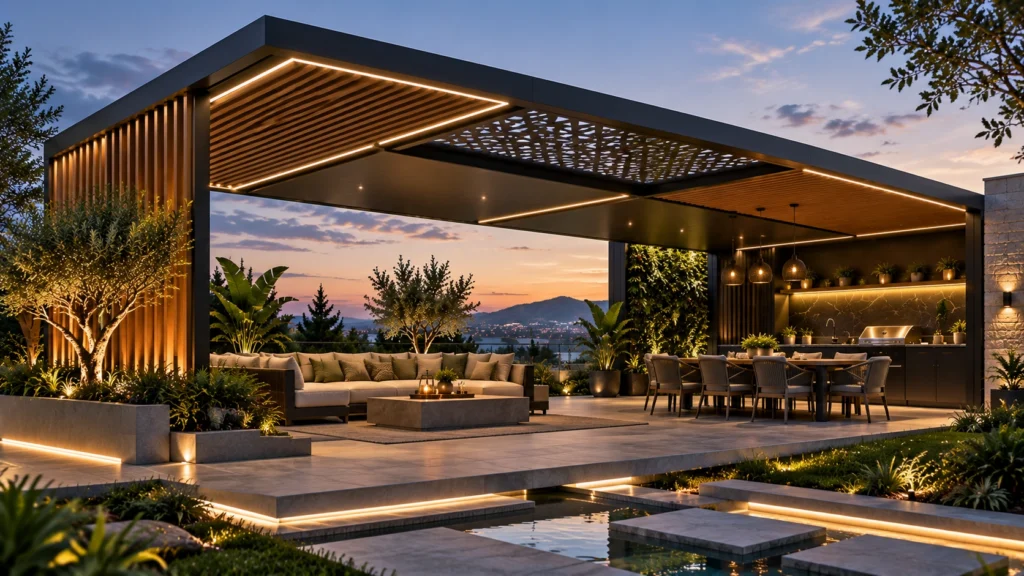
A growing trend in custom pergola design is building lighting, ceiling fans, and even heaters directly into the structure rather than adding them afterward. This creates a cleaner finish and makes the space genuinely usable after sunset, which matters in Dubai where many families and guests prefer to be outdoors once the temperature drops in the evening. Recessed LED lighting along the beams and quiet-running fans have become common requests during the design stage.
Multi-Zone Layouts
Rather than one large open pergola, more homeowners are asking for multi-zone designs, one section for dining, another for lounging, and sometimes a separate covered area for a kitchen or bar setup. This kind of custom pergola design turns a single structure into several functional outdoor rooms, which works particularly well for larger villas and properties that host frequent gatherings or family events.
Smart Controls Built into the Design
Motorized roofs, app-based controls, and sensor-driven adjustments are increasingly part of the initial design conversation rather than an add-on request. Homeowners want to plan the wiring and control points from day one, so the final structure looks seamless rather than retrofitted.
- App-controlled roof panels for remote adjustment
- Integrated LED lighting for evening ambience
- Motorized shading paired with built-in speakers or fans
- Weather-responsive automation for rain and wind
Neutral Palettes with Bold Accents
On the aesthetic side, neutral frame colors, such as matte black, graphite, and sandstone tones, remain popular because they blend with most home exteriors. Homeowners are then adding bold accents through cushions, fabric canopies, or planters to personalize the space without committing to a permanent color choice on the structure itself. This approach also makes it easier to refresh the look every few years without touching the frame.
Planning a Custom Pergola Design for Your Property
Whatever direction you take, the strongest custom pergola designs start with how the space will actually be used, not just how it will look in photos. A good designer will ask about your daily routine, your entertaining habits, and your budget before suggesting materials or layouts, so the final structure fits real life rather than just a trend.
Budgeting for a Custom Build
Custom pergola design naturally costs more than a standard, off-the-shelf structure, since it involves bespoke measurements, material combinations, and often integrated technology. It helps to prioritize the features that matter most to your daily life first, such as shade control or lighting, and treat purely decorative extras as optional add-ons that can be introduced later if the budget allows.
A phased approach also works well for larger properties, where the core structure is built first and additional zones or features are added in a second phase once the initial design has been tested in daily use.
Working With the Right Designer
Not every contractor is equally comfortable with fully custom work, since it demands more coordination between structural, electrical, and finishing teams than a standard build. Ask to see previous custom pergola design projects, and look closely at how different materials and zones were joined together, since clean transitions between sections are often where quality shows most clearly.
It also helps to ask how the designer handles revisions during the process. A custom project rarely goes exactly to the first plan, and a contractor who welcomes adjustments as the build progresses, rather than treating the initial drawing as final, usually delivers a result that fits the property better in the end.
Conclusion
Custom pergola design in Dubai is moving toward structures that are as functional as they are stylish. Whether it’s mixed materials, built-in technology, or multi-zone layouts, the common thread is a pergola planned around how a family or business actually lives, not a generic template. If you’re considering a custom build, start the conversation with your designer around function first, and let the aesthetic choices follow.